


Leaving a residential treatment program doesn’t always feel like a victory. Sometimes it feels like being pushed out of the safest place you’ve ever known.
You’re not wrong for feeling scared. Or sad. Or like you’re losing something important just as you started to find your footing.
That’s the ache of healing—and you’re not alone in it.
What Does “Ready” Even Mean in Early Recovery?
Here’s the truth no one tells you enough: “Ready” isn’t a finish line—it’s a feeling that flickers.
You don’t need to feel strong 24/7. You don’t need to have your entire life figured out.
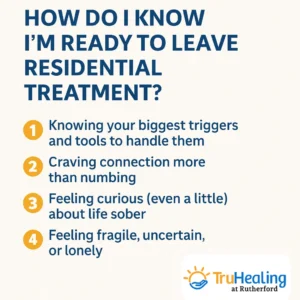
Being ready might look like:
- Knowing your biggest triggers and having some tools to handle them
- Starting to crave connection more than numbing
- Feeling just curious enough about what life could look like sober
You might still feel fragile, uncertain, or lonely. That doesn’t mean you’re failing. That means you’re doing the hard work.
What If I’m Terrified to Leave?
Of course you are. Safety can become sacred in early recovery. And residential treatment is one of the few places where you’re surrounded by people who get it.
But fear doesn’t mean you’re not ready. It just means you care.
You care enough about your healing to want to do this right.
Many people ease the transition through aftercare planning—like moving into a sober living house, or stepping down into an Intensive Outpatient Program (IOP). That way, you still have structure, but you start practicing independence.
I Don’t Feel Like Myself Yet. Should I Stay Longer?
Sometimes staying longer is the right call—but sometimes it’s a way of avoiding what’s next. Here are a few honest check-in questions:
- Am I staying because I genuinely need more support—or because I don’t trust myself yet?
- Have I talked to my therapist or case manager about these fears?
- Would stepping down into a less intensive program help me build more confidence?
You can extend your stay. You can move into sober housing. You can build a life that supports you instead of rushing you. You’re not running out of time.
What Happens After I Leave Residential Treatment?
It’s not a cliff. It’s a bridge.
When you leave residential care, you’re stepping into a new kind of support. That might mean:
- Outpatient therapy: Weekly sessions to keep unpacking what brought you here
- Sober living: A structured environment where you build sober routines in the real world
- IOP or PHP programs: Where you still attend regular group and individual sessions
- Support groups or alumni networks: Where real connection continues
At TruHealing at Rutherford, we help you build a plan before you ever leave our doors—so your next step is clear, not chaotic.
What If I Relapse After Leaving?
Then we hold the door open for you again.
Relapse isn’t proof that you wasted your time in treatment—it’s proof that more support is needed, and that’s allowed.
Most people in long-term recovery have experienced some form of setback.
It doesn’t make you weak. It makes you human.
The key is having a plan: Who will you call? Where will you go? What does safety look like for you?
The goal is progress, not perfection.
How Do I Know I’ll Be Okay?
You won’t know for sure. None of us do.
But here’s what’s real:
- You’ve done the hardest part already—you stayed when it would’ve been easier to run
- You’re asking questions, not hiding from them
- You’ve started to imagine a life with less chaos and more peace
You don’t need to feel 100% ready. You need to feel just brave enough to take the next step—and trust that support will meet you there.
A Few Truths from People Who’ve Been There
“I didn’t feel ready. I felt scared and small. But the first night I made dinner in my own kitchen without using? That was freedom.”
— Alumni, 2022
“You don’t realize how much strength you’ve built until you’re out there living your life. It sneaks up on you—in the best way.”
— Alumni, 2023
“I still get lonely. But I’m not empty anymore. And I know how to reach for people instead of a bottle.”
— Residential Graduate, Maryland
Common Questions About Leaving Residential Treatment
Is there a “right” amount of time to stay in residential treatment?
There’s no universal number. Some people benefit from 30 days. Others need 60, 90, or more. What matters most is the quality of your foundation—not how long you were there.
Talk with your clinical team at TruHealing to assess what’s best based on your progress, goals, and emotional readiness.
What if I don’t have support at home?
You’re not alone in that. Many people leave residential treatment without a safe or sober home to return to. That’s why sober living environments exist—and why aftercare planning includes housing support when needed.
Your discharge team can help you explore local resources in Windsor Mill and beyond.
Can I go back if I realize I left too soon?
Yes. We’d rather you come back than struggle in silence. Whether you want to return to the residential level or just need outpatient support, the door is always open.
You’re never “too late” to come back.
How will I know if outpatient care is enough?
Outpatient programs are a step-down—not a drop-off. If you’ve developed coping tools, have a support system, and are ready for more independence, outpatient might be a good fit.
But if daily life still feels overwhelming or unsafe, you might benefit from staying longer or transitioning more slowly.
A Quiet Reminder Before You Go
If it feels scary to leave… that’s okay. If it feels lonely… that’s normal.
But if you can feel even the smallest spark of hope—hold onto that. That spark is yours. It’s real.
Your recovery doesn’t end when you leave. It continues—outside the walls, in the community, in the quiet moments where you choose to stay instead of escape.
📞 You Don’t Have to Do This Alone
Call (410) 431-3792 or visit our Residential Treatment Program page to learn how TruHealing at Rutherford in Windsor Mill, Maryland can help you plan your next step in recovery—with compassion, clarity, and ongoing support.