


There’s a kind of pain that doesn’t look dramatic on the outside, but it crushes you from the inside out. It’s not about wanting your life to end—it’s about wanting the pressure to end. The noise. The heaviness. The constant effort of pretending to be okay when you’re barely holding the edges of yourself together.
If that’s you right now, take a breath.
You’re not broken.
You’re overwhelmed.
And you deserve a place where that overwhelm doesn’t have to be hidden or explained.
A residential treatment program can be that place. Especially when you’ve been carrying more than any one person should be expected to hold. At TruHealing at Rutherford in Windsor Mill, Maryland, we’ve seen this kind of quiet suffering more often than you think. The kind that whispers, “I don’t want to die—I just don’t know how to keep going like this.”
You’re not alone in that feeling. And you don’t have to keep surviving by yourself.
The Weight You’re Carrying Is Real
There’s a form of exhaustion that goes way beyond being tired. It’s emotional depletion. It’s spiritual burnout. It’s the slow erosion of energy that happens when you’ve been stretched thin for too long without rest, relief, or understanding.
People who find themselves in this kind of place often say things like:
“I’m numb. I don’t feel anything anymore.”
“I’m not trying to disappear… I just need everything to stop.”
“I don’t know what’s wrong with me. I used to handle everything.”
Nothing is “wrong” with you. You’ve been running on empty.
Even strong people buckle under enough weight.
Especially strong people.
You might not have anyone in your life who truly sees the depth of your struggle. You might be functioning well enough on the outside that people assume you’re fine. But inside, the ground feels unsteady. Inside, the lights dim earlier and earlier each day.
We see you.
We understand this kind of pain.
And you don’t have to carry it alone anymore.
When You’re Suicidal but Don’t Actually Want to Die
There is a meaningful difference between wanting your life to end and wanting the pressure within your life to let up. Suicidal ideation doesn’t always come from hopelessness—it often comes from overwhelm. From prolonged emotional exhaustion. From feeling like you’ve been soldiering through something impossible with no break and no backup.
From the outside, it can look like:
- You showing up at work like nothing is wrong
- You making small talk at a family event
- You folding laundry, paying bills, handling responsibilities
But inside, the internal monologue sounds like:
“I can’t keep this up.”
“I just need a pause.”
“If one more thing hits me, I don’t know what I’ll do.”
At TruHealing, we don’t judge that internal truth.
We don’t rush you.
We don’t dismiss what you’re feeling.
We slow the entire world down with you so you can breathe again—really breathe.
You Don’t Need the Words to Deserve Help
One of the cruelest parts of being in emotional crisis is believing you need a perfectly formed sentence to earn support. That you need a dramatic reason or a “good explanation” for why you feel the way you feel.
You don’t.
At our residential treatment program in Windsor Mill, you don’t have to defend your pain.
You don’t have to justify your sadness.
You don’t have to explain your exhaustion in a way that makes sense to anyone else.
If all you can say is, “I’m not okay,” that is enough.
Your pain is valid.
Your numbness is valid.
Your confusion is valid.
Your wanting a break from everything is valid.
We meet you exactly where you are—not where you think you “should” be.
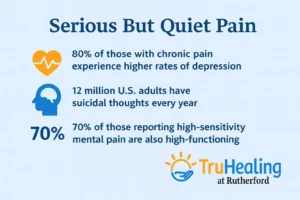
What a Residential Treatment Program Actually Gives You
A lot of people imagine “treatment” as pressure. As something that demands performance, participation, instant healing, or emotional exposure.
But real treatment—safe treatment—is the opposite.
Here’s what we offer at TruHealing at Rutherford:
1. Quiet
The kind you can feel.
The kind that lets your nervous system stop buzzing.
2. Structure without pressure
Your days are gently organized for you.
You don’t have to make decisions while you’re fragile.
3. People who truly listen
Not to fix you.
Not to rush you.
Just to understand you.
4. A break from everything hurting
Sometimes the most therapeutic thing is simple:
three meals a day, rest, safety, and people who actually care.
5. Safety when your own mind feels unsafe
We help hold the parts of you that feel unsteady.
You don’t have to hold them alone.
A residential treatment program is a pause button for a life that has gotten too heavy.
It’s not a place where you’re expected to be “brave” or “positive.”
It’s a place where you can finally put the weight down.
You’re Not Expected to Be Okay Here
Many people fear that entering treatment means being bombarded with questions:
“Why are you feeling this way?”
“What happened?”
“Are you ready to talk?”
But you set the pace.
Some people don’t say much at first.
Some just rest.
Some cry.
Some sleep.
Some sit in quiet rooms and just try to breathe again.
All of these are okay.
Healing isn’t linear.
It’s not a performance.
It’s the slow returning of your spirit to your body.
At TruHealing, we hold space for that return—not force it.
Rest Isn’t a Luxury. It’s the First Step Toward Wanting to Live Again.
When people arrive emotionally shattered, they’re usually carrying years of unspoken pain. Years of strength. Years of holding the world together for everyone else.
We’ve seen people who haven’t truly rested in decades.
And the first few days?
They sleep.
They breathe.
They settle.
Because their mind finally realizes it’s safe enough to stop fighting.
That’s the beginning of healing—not an action plan, not trauma work, not intense therapy.
Rest.
Pure, unapologetic rest.
You deserve that.
Your nervous system deserves that.
Your heart deserves that.
You Don’t Have to Know the Way Forward
Here’s something gentle but true:
You don’t need clarity to begin.
You don’t need certainty.
You don’t need a full picture of your future.
You only need one tiny desire:
“I don’t want to feel like this anymore.”
We can work with that.
We can hold that.
We can help that tiny spark become something steadier.
If you’re near Windsor Mill or anywhere in Maryland, you’re closer to support than you think. You can learn more here:Residential Treatment Program | TruHealing at Rutherford
FAQs: Gentle Answers for When Everything Feels Fragile
Is a residential treatment program only for people in crisis?
No. It’s for anyone who feels unsafe in their own mind, overwhelmed, numb, or unable to keep going. You don’t have to be in a crisis to get help.
What if I’m scared to ask for support?
That fear is normal.
We meet you exactly where you are, fear included.
You don’t have to hide that you’re scared—we expect it.
Do I have to talk about my feelings right away?
Absolutely not. You set the pace. Some people don’t speak much in their first days—and that’s okay.
Can treatment help if I don’t know what’s wrong?
You don’t need a diagnosis to deserve support. Emotional exhaustion and suicidal ideation are reasons enough to seek care.
What if I don’t see a future for myself right now?
We’ll hold the hope for you until you can hold some of it yourself. You don’t have to walk toward the future alone.
How does staying in a residential treatment program help with suicidal thoughts?
It provides safety, structure, honest listening, and space to rest. When your system isn’t in constant crisis mode, your mind becomes clearer—and healing becomes possible.
Let Someone Hold You for a While
You’re not weak.
You’re not failing.
You’re not beyond repair.
You’re tired.
You’re hurting.
And you deserve a place where your pain doesn’t confuse or scare anyone.
At TruHealing at Rutherford, we don’t rush you into hope. We sit with you until hope becomes possible again.
When you’ve carried too much for too long, let someone carry you for a little while.
If you’re ready for a safe place to rest and feel supported:
Call (410) 431-3792 or visit to learn more about our Residential Treatment Program services in Windsor Mill, Maryland.