


When you imagine treatment, maybe you see rigid routines, stark rooms, and having to check pieces of yourself at the door. But what if the opposite were true? What if the space where you dared to get sober could be the place you remembered who you are—your voice, your creativity, your depth, your whole self? That’s the quietly powerful promise of a partial hospitalization program, and it’s why many people don’t just recover there—they find themselves again.
In the first days of thinking about change, the mind tells stories to protect itself. It whispers that sobriety will take away your edge, your spontaneity, your emotional depth—that without your substance of choice, you’ll be a hollowed-out version of who you think you are. But when you step into real support, you begin to learn something different: the truest parts of you were there all along, waiting beneath the fear.
Right from the start of your journey with a partial hospitalization program like the one at TruHealing at Rutherford, you’re invited to show up as you are. That’s part of what makes the experience transformative in a way that feels both safe and real.
Facing the Fear That Sobriety Will “Take You Away”
There’s a unique vulnerability in worrying that sobriety will erase who you are. Feelers, artists, deep thinkers, and high-emotion personalities often rely on their emotional intensity as part of their identity. You might worry that the parts of you that feel deeply, or lean into the discomfort of life, will be dulled by recovery. You imagine a monochrome version of yourself walking through a colorless world.
This fear isn’t stranger than you think—it’s human. It comes from all the times you used substances to access emotion, inspiration, connection, or even courage. You may have accidentally learned to link creativity and feeling with intoxication, so the idea of experiencing either without that filter feels risky or unknown.
Within a partial hospitalization program, one of the first lessons is that emotion isn’t a bad thing. Feeling deeply doesn’t mean you’re broken. And sobriety doesn’t flatten you; it clarifies you. It pulls back the fog so that your truest self can finally speak without distortion.
What a Partial Hospitalization Program Really Is
A partial hospitalization program (PHP) often sits between outpatient therapy and full residential treatment. It’s structured, supportive, and consistent, but it doesn’t require you to live on-site. You attend programming during the day, engage with clinical support, and then return to your own environment in the evenings.
This format offers a powerful blend: the safety of professional support plus the grounding of real-world living. You get to practice new skills in the real world—at home, at work, in your relationships—while knowing you’ll return the next day to support, reflection, and connection.
For many people, that balance helps them reconnect with themselves in ways they never expected. The world doesn’t pause just because you’re in treatment, and PHP recognizes that fact. You don’t get isolated from your life; you learn to live within it more fully.
Rediscovering Creativity, Identity, and Purpose
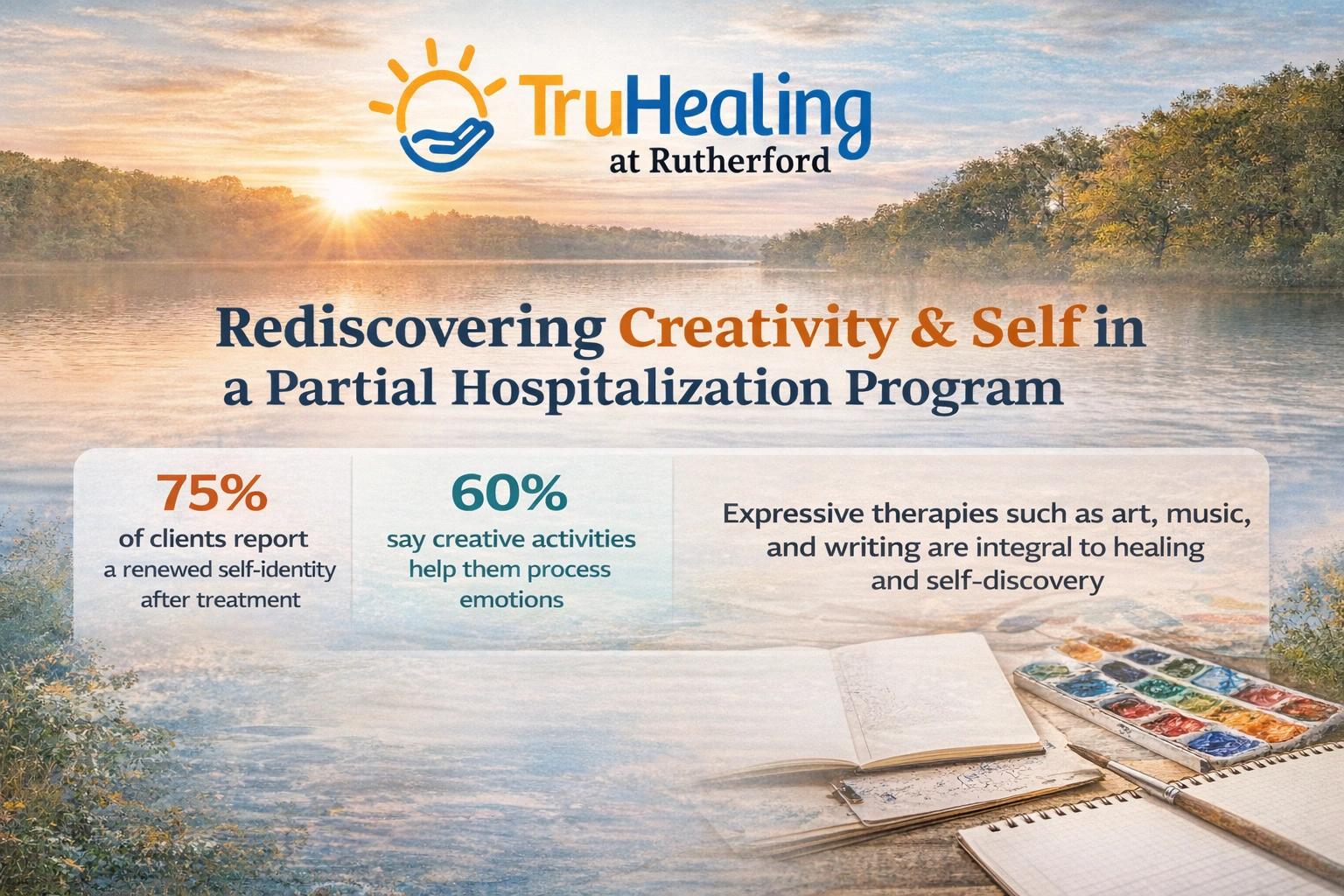
One of the most beautiful and surprising parts of recovery in a partial hospitalization program is how often people rediscover their creative selves. When substances are no longer distorting your perception or dulling your senses, your imagination starts to flow again in ways both familiar and new.
Painting classes, expressive writing groups, drama therapy, music sessions, creative journaling—these aren’t extras. They’re integral to healing. And they help you unearth the parts of yourself you might have buried beneath anxiety, shame, or the belief that creativity needed a chemical spark to exist.
People often tell us that during their deepest struggles, they forgot what it was like to feel pure joy, to write without self-criticism, or to make art that isn’t filtered through pain. A partial hospitalization program gives you the space to try these experiences again—with support, reflection, and real-time feedback.
There’s No “One Right Way” to Be You
Here’s what many people don’t realize: sobriety doesn’t demand a single way of being. It doesn’t tell you to be neat, quiet, or predictable. It doesn’t erase your quirks or your passions. What it does is remove the barriers—the chaos, the unconscious coping, the numbing—so that you can see your choices clearly.
Within programs like the one at TruHealing, you aren’t expected to become someone else. You’re expected to become more of who you truly are—a version of you that isn’t living from wounds, fear, or survival mode, but from clarity, intention, and authenticity.
And that’s why so many people describe their experience not as losing themselves, but as finding their way back home.
How Structure in Treatment Helps You See Yourself
Structure can feel frightening when you’ve been living in unpredictability or emotional chaos. But structure isn’t a cage—it’s a mirror. It reflects patterns, exposes shadows, and gives you a rhythm that you didn’t know you were starving for.
In a partial hospitalization program:
- You show up to groups and begin to notice how you relate to others.
- You practice coping skills in real time and see what works.
- You sit with feelings that used to trigger avoidance.
- You learn emotional regulation instead of emotional suppression.
Each day becomes a chapter in your story of rediscovery, not a script you have to follow mindlessly.
Community: Not Just Support, But Reflection
One of the most underrated parts of recovery is the way community holds up a mirror to us. In a PHP setting, you’re surrounded by others who are also grappling with identity, fear, hope, loss, and the question of who they are without their substance of choice.
And in that shared experience, something remarkable happens: you start to see yourself with empathy. You notice strength where you once saw weakness. You hear your story in someone else’s words and realize you aren’t alone. You begin to understand that vulnerability isn’t a flaw—it’s proof of being alive.
This kind of connection doesn’t dilute your uniqueness. It enriches it. You learn that identity isn’t something you lose when you let go of substances—it’s something that evolves.
A Real-Life Example: Sophie’s Story
Sophie always thought her art came from her intensity. She believed her substance use was part of her creative process. When she first entered a partial hospitalization program, she was terrified that sobriety would mute her voice.
But through expressive arts therapy, honest conversations, and unfiltered mornings of clarity, Sophie began to paint again—and this time, her work felt more authentic. She didn’t need the fog. She needed presence.
Weeks into her program, she told her therapist, “I thought sobriety would take away my feeling. But it’s given me depth I didn’t know was there.”
Stories like Sophie’s aren’t rare. They’re common among people who enter a partial hospitalization program thinking they’ll shrink—and find themselves growing instead.
You Don’t Have to Know the Ending
One of the hardest parts of beginning recovery is not knowing what comes next. For creatives and identity-focused people, that fear can feel especially sharp because uncertainty feels like a threat to your self-concept.
But here’s the honest truth: you don’t have to know the ending. You don’t have to predict how your life will unfold. You don’t have to promise perfection. You only have to be willing to stay curious about who you might be without the weight of substances.
And that’s a gentle kind of bravery.
A Word About Support Outside Treatment
As you go through a partial hospitalization program, you’ll also build a network that extends beyond the treatment setting. This might include supportive friends, mentors, creative peers, sober communities, or hobbies that anchor you.
Many people think they’ll have to give up their life to get better. But the truth is this: you get to build a richer life—one where your creativity, your depth, and your emotional nuance are intact, and free from the burden of addiction.
It’s not about loss. It’s about expansion.
One Important Note About Place
Recovery is shaped by where it happens as much as how it happens. That’s why so many people have found grounding and healing here at TruHealing, located in Anne Arundel County, Maryland—a setting that balances serenity with community, structure with comfort.
FAQs About Partial Hospitalization Programs
What exactly is a partial hospitalization program?
A partial hospitalization program (PHP) is a structured treatment approach that offers intensive therapeutic support during the day while allowing you to return home or to a supportive living environment at night. It’s ideal for people who need a level of care beyond outpatient therapy but don’t require 24/7 residential treatment.
How long does a PHP usually last?
The length of a PHP varies depending on individual needs. Some people participate for a few weeks, while others stay longer. The goal is to provide enough support and skill-building so you can transition back into daily life with resilience and confidence.
Will I lose my creativity in treatment?
No—creativity isn’t something you lose in treatment. In fact, many people rediscover or deepen their creative expression once they’re not numbing, distracting, or dulling their emotional experience with substances. Treatment often includes expressive therapies that nurture, not suppress, creativity.
Is PHP the same as inpatient treatment?
Not exactly. Inpatient treatment requires living at the facility full-time, whereas a partial hospitalization program allows you to go home in the evenings. Both offer support, but PHP offers a balance that lets you apply what you’re learning in real-life contexts.
Will I feel “different” without substances?
At first, yes—change always feels strange. But over time, people often describe feeling more themselves than they have in years. You’ll feel clearer, more present, and more connected to your values and passions.
Who is PHP best for?
PHP is excellent for individuals who need structured, consistent support but also benefit from maintaining real-world connections. It’s particularly helpful for those who want to rebuild identity, manage emotions, and strengthen coping skills while still engaging with daily life.
If you’re wondering whether the next chapter of your story could be one of discovery instead of loss, you’re already asking the right questions. Change doesn’t erase you. It uncovers you.
Call (410) 431-3792 to learn more about our Partial hospitalization program in Baltimore Maryland.