


If you’re reading this because you’ve stopped drinking—or you’re trying to—you already know the first 30 days of sobriety aren’t easy.
They can feel like waking up underwater. Your body is restless, your emotions are sharp, your mind won’t stop spinning. Even if you’re committed, there’s often a quiet voice in the back of your head asking, “Can I really do this?”
At TruHealing at Rutherford, we’ve walked alongside thousands of people through those first uncertain days. Our alcohol addiction treatment program in Windsor Mill, Maryland is designed for exactly this: the moment when you’re done drinking but don’t yet know what comes next.
You don’t have to figure it out alone. And you don’t have to be perfect to begin.
Why the First 30 Days Matter So Much
Sobriety doesn’t begin with a perfect mindset. It begins with a decision to try—even when you’re scared, even when you’re not sure.
The first 30 days are foundational because your body, brain, and emotions are going through real change. During this window, alcohol is leaving your system. Your nervous system is recalibrating. Your patterns are being disrupted. And you’re learning how to sit with discomfort without numbing it.
It’s raw. But it’s also full of possibility.
This is where treatment makes a difference. While friends or family might cheer you on from the sidelines, alcohol addiction treatment provides a structured, clinical, and compassionate environment that’s built to carry you through the chaos of early sobriety.
You’re Not “Weak” for Needing Support
One of the first hurdles new clients face isn’t physical—it’s emotional. It’s the belief that if you need help, you must not be strong enough.
That couldn’t be further from the truth.
In early recovery, it’s not your job to be strong. It’s your job to stay safe—and let support systems do some of the heavy lifting while you heal. Treatment is a place where you can stop pretending everything is fine and start being real—about your fears, your cravings, your questions, and your hope.
No one judges you for being here. We know what it takes to walk through the door.
Detox: The First Physical Step Toward Healing
If you’ve been drinking heavily, your first step in treatment might involve medical detox. This is especially important if you’re at risk for withdrawal complications like seizures, hallucinations, or dangerous changes in blood pressure.
At TruHealing at Rutherford, detox is:
- Supervised by licensed medical staff 24/7
- Supportive—not scary or clinical
- Focused on comfort and stabilization
- Paired with emotional support so you don’t feel isolated
You may sleep a lot in the first few days. You may feel anxious or low. That’s okay. It’s your body doing the work of recalibrating—and we’re here to make sure you’re safe every step of the way.
Therapy Isn’t About Fixing You—It’s About Helping You Understand You
In your first 30 days, you won’t be asked to figure out your entire life or unpack every trauma. But you will start getting curious about the role alcohol played in your story.
Therapy in alcohol addiction treatment may include:
- Individual sessions to explore triggers, emotions, and patterns
- Group therapy where you hear, “Me too” more than you expected
- Psychoeducation, which helps you understand addiction as a condition, not a character flaw
- Mindfulness or body-based practices to help you reconnect with yourself
You’ll start learning how to live with uncomfortable feelings—without needing alcohol to silence them. That’s not easy. But over time, it becomes possible. Then powerful.
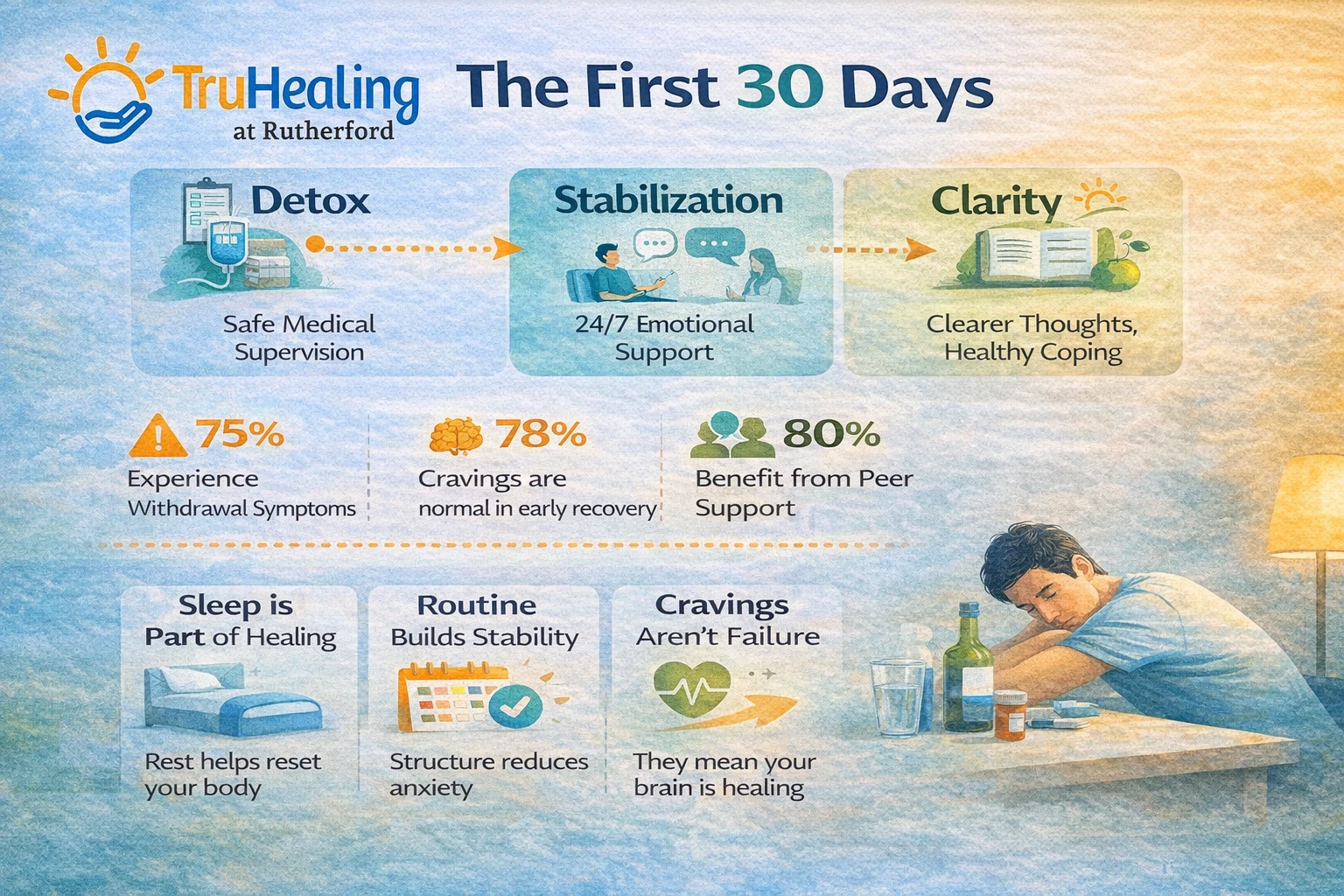
Cravings Don’t Mean You’re Failing—They Mean You’re Rewiring
Let’s say this clearly: Cravings are not signs of weakness.
They are signs of change.
In the first month, your brain is adjusting to a new way of coping. For months or years, alcohol may have been your stress reliever, your social lubricant, your emotional off-switch. Without it, your brain will naturally reach for the familiar—until it learns a new rhythm.
In treatment, we teach practical ways to ride out cravings, including:
- The urge-surfing technique—a mindful way to watch cravings rise and fall without reacting
- Understanding the HALT triggers: Hunger, Anger, Loneliness, and Tiredness
- Learning to name your emotions clearly, which helps reduce the urge to escape them
- Building new daily structures so your brain knows what to expect
Eventually, cravings get quieter. But even before they do, you’ll get better at not answering the call.
Peer Support: The Thing You Didn’t Know You Needed
In early sobriety, it’s common to feel alone—even if people around you care. Because unless they’ve been through it, it’s hard to explain:
- The sudden rage when someone casually offers you a drink
- The deep sadness at 9pm when you’re usually numbing out
- The weird joy of waking up clear—and also scared of how long it will last
That’s where peer support in group therapy matters. In your first 30 days, you’ll meet people at different points in recovery. Some just behind you. Some just ahead.
And that changes everything.
You start to believe: If they made it one more day, maybe I can too.
What Progress Looks Like in the First Month
Sobriety progress isn’t measured by perfection. It’s measured by willingness, effort, and honesty.
In your first 30 days, progress might look like:
- Going to bed sober for the first time in years
- Letting someone see the version of you that’s scared
- Eating a full meal and keeping it down
- Making it through a craving without picking up
- Feeling proud, even if it’s just for five minutes
Treatment doesn’t promise constant forward motion. Some days you’ll stumble. But you’ll do it in a place where you can get back up—with help.
What Happens After the First 30 Days?
Recovery doesn’t stop after a month. But by then, you’ve built a foundation:
- You know your patterns better
- You’ve practiced healthy coping skills
- You’ve seen that sobriety is possible
- You’ve made connections that can follow you into aftercare
After 30 days, you may step into:
- Intensive Outpatient (IOP) care for continued support with more flexibility
- Outpatient therapy for ongoing emotional processing
- Sober living for structured independence
- Alumni groups or peer support meetings to stay connected
At TruHealing in Carroll County, Maryland, your discharge plan is made with you—not handed to you. It’s realistic, supportive, and tailored to your next step.
FAQs: Alcohol Addiction Treatment in the First Month
What if I’m not sure I’m “bad enough” to need treatment?
If alcohol is interfering with your life, health, or emotions, that’s enough. You don’t have to hit bottom to deserve support.
Will I have to share my story in group therapy?
No. You can participate at your own pace. Most people open up gradually, and you’re always respected for where you’re at.
Can I leave treatment if I change my mind?
You’re not locked in. But we encourage completing the program so you give yourself a real chance. Our team is always open to honest conversations.
What if I’ve already tried to quit on my own and failed?
You’re not alone. Many people come to treatment after multiple attempts. That’s not failure—it’s part of the process.
Is alcohol treatment only for people with “severe” addiction?
No. People come to treatment at all stages—whether they drank daily or just felt out of control on weekends. If it’s harming you, treatment can help.
Let This Be the First Month That Changes Everything
You don’t need to be ready for forever. Just ready for today.
Call (410) 431-3792 or visit Alcohol Addiction Treatment in Windsor Mill, Maryland to learn more about our services. You deserve to feel safe, supported, and sober—and we’re here to help you get there.