


When your child is 20 and drinking again, it can feel like everything is slipping through your fingers.
You may wonder if you missed something. If it’s just a phase. If they’ll ever find their way again. At TruHealing at Rutherford’s Alcohol Addiction Treatment program in Windsor Mill, Maryland, we help young adults—and their parents—get back on track, even when the road has felt uncertain for a while.
You’re not alone in this. And it’s not too late for them.
Early Adulthood Is a Storm—and Alcohol Makes It Harder
The early twenties are often painted as a time of freedom, adventure, and becoming. But behind that, there’s often something messier: confusion, identity loss, and fear of failure.
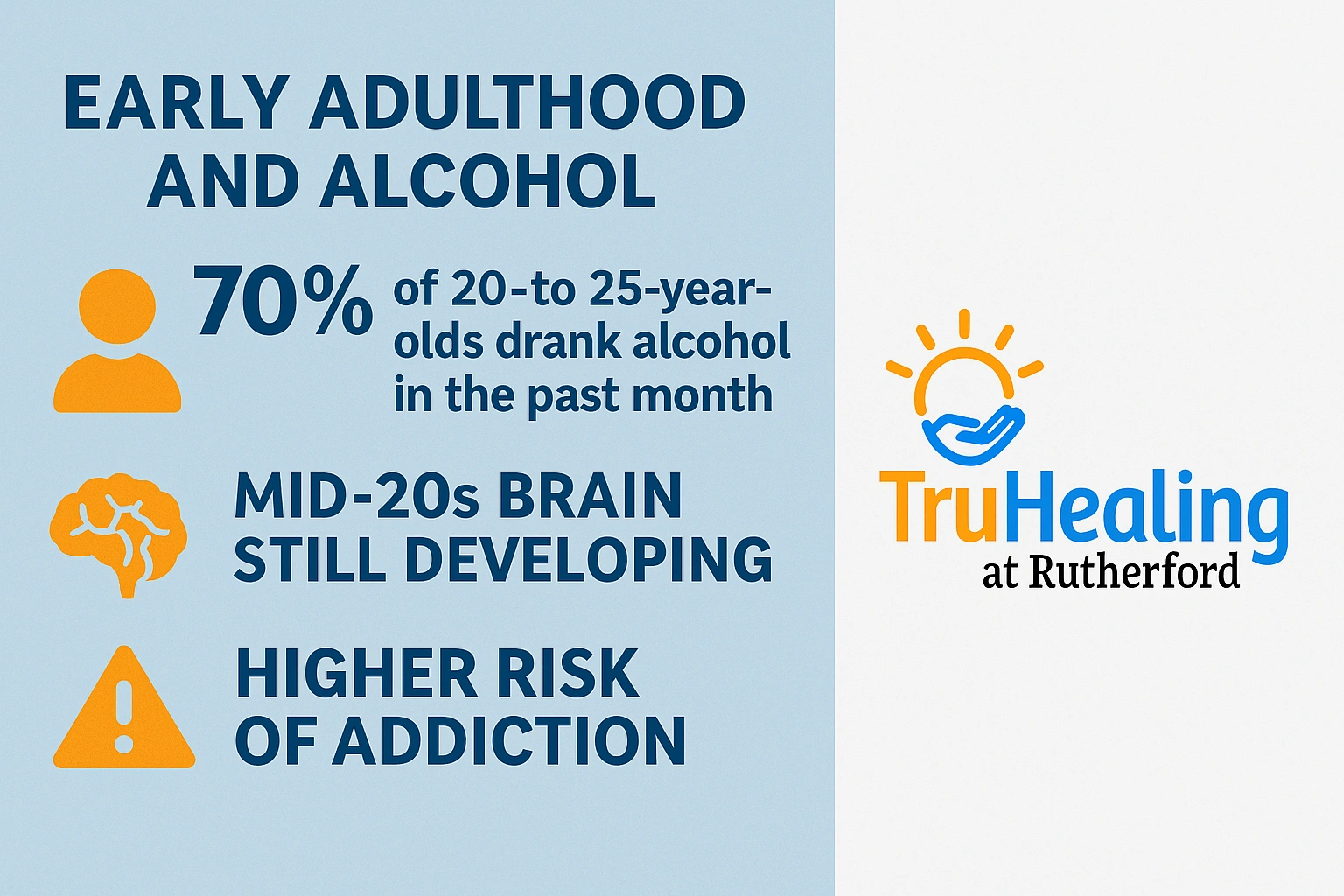
The brain is still developing well into the mid-20s, especially in the areas responsible for decision-making, impulse control, and emotional regulation. That means your 20-year-old might look like an adult—but still be emotionally vulnerable in ways you can’t always see.
Add alcohol to that picture, and things get more complicated.
Drinking in this phase doesn’t always lead to addiction. But when it becomes the way they handle stress, loneliness, or social pressure, it can quickly shift from exploration to dependence.
When Drinking Is More Than a Phase
You’ve probably asked yourself: Is this just normal young adult behavior? After all, college parties, late nights, and experimentation are often seen as part of the territory.
But here’s what to watch for:
- Increased secrecy around alcohol use
- Escalating consequences—missing work, failing classes, losing relationships
- Emotional instability or isolation that wasn’t there before
- Failed attempts to cut back or stop, even when they say they want to
If your child’s drinking is no longer occasional—and especially if it’s starting to affect their ability to function or connect—it may be time to look beyond “phases” and toward real support.
That’s where alcohol addiction treatment comes in.
What Alcohol Addiction Treatment Actually Looks Like for a 20-Year-Old
Many parents hesitate to pursue treatment because they picture harsh, institutional settings—or worry their child will feel punished.
But today’s programs are built differently, especially those tailored to young adults.
At TruHealing at Rutherford, alcohol addiction treatment includes:
- Detox support, if needed, to help them safely come off alcohol
- Therapy that meets them where they are, including trauma-informed and age-appropriate modalities
- Life skills development, so they’re not just sober, but stable
- Supportive peer environments, where they see they’re not alone in this
Treatment isn’t about fixing your child. It’s about helping them understand what’s underneath their drinking—and giving them the tools to build something healthier.
Why Early Treatment Matters So Much
There’s a common myth that someone has to “hit rock bottom” before they get better. But the earlier your child receives help, the more likely they are to regain control before long-term patterns set in.
Here’s what treatment can interrupt:
- Escalating risk behaviors, including unsafe driving or unprotected sex
- Academic or professional derailment
- Co-occurring mental health issues being masked by drinking
- A growing sense of hopelessness that says, This is just who I am now.
Early intervention doesn’t just protect your child’s future. It gives them back the belief that a different life is possible.
How Parents Can Help—Even if Their 20-Year-Old Doesn’t Want It
At 20, your child might be legally independent. But that doesn’t mean they don’t need you. It just means they may not show it the way they used to.
If they’re resistant to help, here’s what you can do:
- Keep the door open. Express concern without blame. “I’ve noticed you’ve seemed overwhelmed. I’m here when you’re ready to talk.”
- Set gentle but firm boundaries. You can love them without enabling.
- Stay connected. Even if they push away, knowing you’re there makes a difference.
- Offer resources, not ultimatums. Share treatment options without demanding commitment.
We’ve seen many 20-year-olds show up to treatment because someone in their life believed in them—without forcing, fixing, or giving up.
If They’ve Tried Before and Relapsed—It Doesn’t Mean Treatment Failed
Relapse is often part of the recovery process, especially for young adults still learning how to navigate emotion, stress, and change.
If your child has been in treatment before and started drinking again, it doesn’t mean the first program “didn’t work.” It means something still needs care—and that more support may be needed.
At TruHealing, we offer second chances grounded in compassion. We understand the grief of watching your child struggle again. And we believe that every return to treatment is a sign of courage, not failure.
You’re Allowed to Grieve—And Still Have Hope
When your child is 20 and drinking again, it’s easy to feel like you’re mourning someone who’s still alive.
The version of them who used to laugh easily. Show up on time. Dream big.
But here’s the truth: they’re still in there. Underneath the alcohol, the defensiveness, the distance—your child still exists.
And with the right support, they can come back to themselves. Not always quickly. Not always neatly. But fully.
Alcohol addiction treatment isn’t a magic fix. But it is a lifeline. For them—and for you.
FAQs: What Parents of 20-Year-Olds Want to Know
How do I know if my 20-year-old needs treatment or is just experimenting?
Look for changes in behavior, relationships, mood, and function. If alcohol use is leading to serious consequences or emotional instability, it’s time to talk about treatment.
What if they refuse to go? Can I force them?
You can’t force a 20-year-old into treatment unless there’s a legal intervention. But you can continue to express concern, set clear boundaries, and offer support when they’re ready. Many young adults say they eventually accepted help because someone stayed patient with them.
Does treatment mean they have to stop drinking forever?
Some programs emphasize complete abstinence, while others explore harm reduction. At TruHealing, we tailor treatment to each individual’s needs—but we always help clients explore their relationship with alcohol honestly.
Isn’t this just a phase? Won’t they grow out of it?
Some do. But for others, alcohol use masks deeper pain or mental health struggles. If it’s harming their quality of life or relationships, they deserve real support—now, not later.
Can I be involved in their treatment?
Yes. At TruHealing, we often involve families in therapy sessions, education, and aftercare planning. Your support matters—but so does your healing.
You Don’t Have to Do This Alone
If your 20-year-old is struggling with alcohol, the road ahead may feel overwhelming. But help exists. And hope is still possible.
Call (410) 431-3792 or visit our Alcohol Addiction Treatment page to learn how TruHealing at Rutherford supports young adults and their families in Windsor Mill, Maryland—with compassion, clarity, and care that meets them where they are.